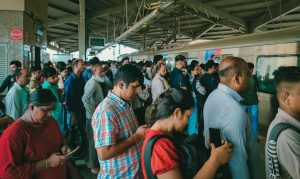






The age of connectivity has dawned upon us, and it has become an urgent need to revamp our urban landscapes so that they can make the most of this developing technology and tackle the challenges of today. These challenges, while present before the time of the pandemic, have been amplified and further concentrated in our urban landscapes.
If we look to some of Asia’s greatest cities, those that grew out of organic communities and whose development were underfunded and often ill-planned, there are a large number of issues that plague our urban communities, and these need to be rectified quickly to uplift the current living situation.
The demands on Asia’s aging urban infrastructure, limited city budgets and for reliable energy, are more present today than ever, as the city is reinvented under new social norms and increased constrain on governments.
However, the one thing that needs to be kept in mind at all times is that these developments won’t happen instantaneously. Specific steps need to be carried out one-at-a-time if these smart city challenges need to be tackled effectively – a concept that is easier said than done.
Therefore, to help coherently achieve this goal, one such significant step that can be taken is to utilise the technology of Industrial Internet of Things (IIoT) and smart panels, which can go a long way in ensuring that these challenges can be met with relative ease – despite municipal budget and attention being focused on pandemic relief.
One of the most significant urban challenges of today that must be addressed is the prevalent and commonplace issue of power distribution.
One need only look at the current situation in the Philippines to understand this challenge – ‘brown-outs’ and outages have become increasingly prevalent in the country especially during the summer season, to the point where the general populace has become used to these issues.
The current situation makes it imperative to see to it that these two forms of technology are implemented sooner than later, and to increase resilience of Asia’s urban areas.
This will help in the accomplishment of the following goals:
Protection
Any fluctuations in voltage will be highly debilitating for the overall functionality of electrical units and equipment, for obvious reasons.
Therefore, to ensure that the lifespan of these appliances is improved immensely, cities across the region should ideally adopt the latest IIoT and smart panels technology to help augment the functionality of a distribution management system.
This IIOT technology will allow municipalities and companies alike to pinpoint overloads and inefficiencies before they reach the community and help them make informed decisions relevant to new social norms or population densities.
Connectivity
One of the significant benefits of adopting the latest digital technology across our cities is the increased level of connectivity.
This will allow cities to employ the system of advanced process control with relative ease and will enable one to tackle the smart city challenges of today with greater effectivity and efficiency.
By creating an intelligent network of connected systems and objects, cloud-based applications can help municipalities, companies and citizens make better decisions about their everyday choices.
Action
Big data analytics is one of the major trends that’s riding the wave of digital transformation, and it must be said that smart panels and the Industrial Internet of Things will help in the collection of data imperative to the running of buildings or sectors.
So, by implementing this technology, one will be able to analyse the data and understand the best course of action that can be taken to optimise any inefficiencies that might be plaguing these cities and impeding them in their goal of tackling the challenges faced in forming a smart city.
From energy management to air quality, the pairing of devices with urban infrastructure can help city managers control costs, oversee processes and support the needs of their community.
Given the new challenges facing cities across Asia today, it’s important that municipalities do not forget that technology exists to ease their woes.
Cities not only see a concentration of lifestyle challenges, they are also the hotbed of technological investment and innovation, and this must remain true if Asian cities will prosper in the face of the global pandemic.
It remains vital for cities to adopt the technology of smart panels as soon as possible so that these urban challenges can be tackled with relative ease, and municipalities can focus on the health of their populations.