




To say that technology has a healthy growth prospect in Hong Kong is being very forward-looking.
Leo Lo, the founder of Asia PropTech, laments the difficulty of finding support for Proptech in the city. He noted the lack of incentive to innovate, blaming the situation partly on the small landmass and a convenient transportation system.
He is hopeful that there will be better prospects for the future but much needs to happen. He describes the need to have data standardisation, in addition to the actual lack of industry data. He also laments the lack of open data – and says the government needs to lead in this regard.
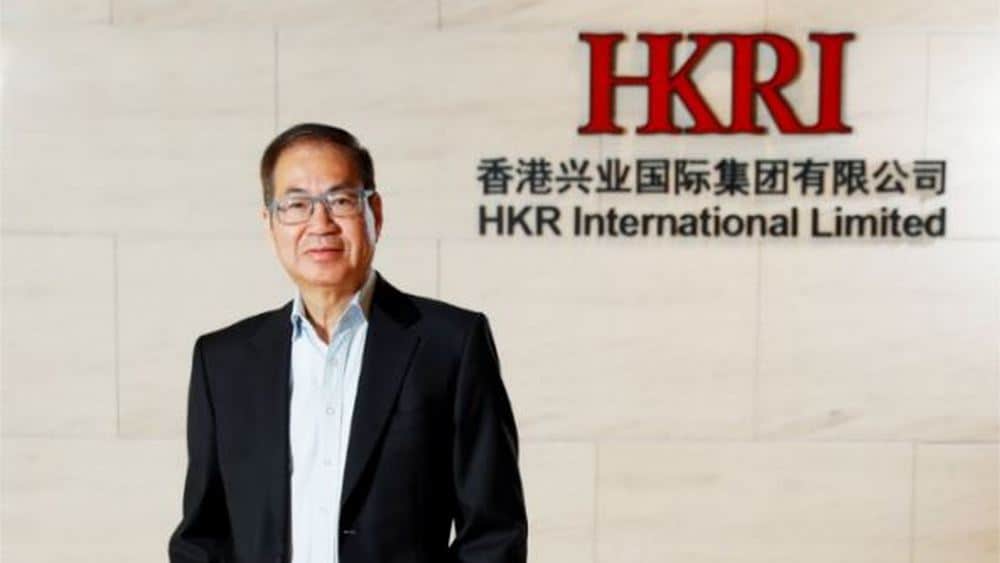
FutureIoT spoke to Jackie Tang, executive director, HKR International Limited to take his perspective on how the Hong Kong property market is evolving amidst all the challenges engulfing not only the city and the world.
What kind of technologies are property developers employing in the design, building and management of the commercial property?
Jackie Tang: Disruption and innovation come in pair so do threats and opportunities. We have vaulted five years forward in consumer and business digital adoption in a matter of around eight weeks during the national lockdowns in China.
Within commercial properties, agile, all-round anti-epidemic measures are in urgent demand. For example, at our flagship HKRI Taikoo Hui commercial complex in Shanghai, in addition to thermal imaging cameras at every entrance, we have also implemented healthcare stations, public area sterilisation protocols and controlled access gates.
Contactless application has undoubtedly played a centre-stage role. We introduced robots to take over part of the security and cleaning work to avoid physical interaction between people. The security robots patrol the property and report any exceptional situations in real-time, so back-office staff can immediately take appropriate action. The cleaning robot disinfects the floors, which releases more labour to flexibly deal with other disinfection needs in accordance with the actual footfall.
To help soften the blow for retail tenants, we joined hands with a number of brands to launch a variety of live streaming programmes, so they can promote their products and engage with customers online. This helps retain customer loyalty even when they are less willing to shop in the mall.
On the residential side in both mainland China and Hong Kong, we have continued to practice a smart property approach to provide more comfortable and convenient living environments to our residents. For example, in our properties in Jiaxing city, a range of devices, such as smart ventilation systems, infrared anti-theft systems and elevators equipped with video communications, have been deployed.
What new skills, expertise and experience do you see will become important to property developers in the next 2-3 years?
Jackie Tang: I am a strong believer in the saying that the enemy of success is not failure but comfort. The pandemic has a big impact on people’s attitude toward lives and livelihoods. During the time of stay-at-home, it gives a breathing space for many people to stay away from day-to-day working routine but to sit back and think out-of-the-box. It may be the only blessing of the pandemic.
To realise the vision of smart cities, we need to start from ABC. A is Artificial Intelligence. B stands for Big Data. C means Cloud Computing. Data analytics help us understand consumers better, predict market demand more accurately and respond to changes more promptly.
With consumers being more tech-savvy and 5G empowered, businesses have to deploy technology more widely. That includes within daily operations to accommodate the digital transformation of internal management and respond to the demands of clients. Solutions like mobile working, video conferencing facilities, higher-speed internet connections and holistic solutions for remote working, online sales offices and digital show-flats.
Before the lockdowns, we have been using VR and AR technology in sales offices.
HKR International’s competitive edges have always been on differentiation, innovation and quality. After the pandemic has abated, customers will be more prudent when making buying decisions. Thus, only developers that provide outstanding quality and differentiated products, services and experiences will be able to win clients in the long term.
Do you anticipate the Hong Kong government’s smart city blueprint impacting the business of property developers? How do you see developers like HKRI responding to such projects?
Jackie Tang: I am happy to see that more and more developers are embracing this opportunity to upgrade and enhance all aspects of their businesses – starting from changing management mindset to transforming daily operations, from architectural design to property management.
The Smart City blueprint mapped out a vision in six areas – “Smart Mobility”, “Smart Living”, “Smart Environment”, “Smart People”, “Smart Government”, and “Smart Economy.” Among them, connectivity and sustainability are two of the core factors we need to pay attention to in the property industry.
At HKRI, we see ourselves as a lifestyle curator rather than a property developer, enabling residents, tenants and customers to live happy, rewarding and sustainable lives. We were the first property developer with the big vision of building Asia’s first eco-environmentally friendly town in Discovery Bay. Sustainability was embedded in every aspect of Discovery Bay and extends to the whole group.
We adopt 3Es in our sustainability policies. They are Environment, Empathy and Ecosystem. Environment means respecting nature and being environmental-friendly. Empathy stands for respect for people which include internal and external stakeholders and extend to the wider community and society.
We have dedicated resource to look at employee relations, talent development, compliance, community services and corporate social responsibility programmes. Ecosystem means educating and engaging our stakeholders including the whole supply chain. By joining forces, we could extend the reach and amplify the momentum to build a truly sustainable world.
We observe green design, green buildings, the green operation to green living. Green practices such as energy efficiency, emission reduction and waste recycling are widely applied within the organisation and in our projects. For example, no private vehicles are used in Discovery Bay. HKR operates public transportation services including eco-friendly buses and scheduled ferry services. The land-building ratio is as low as 0.16.
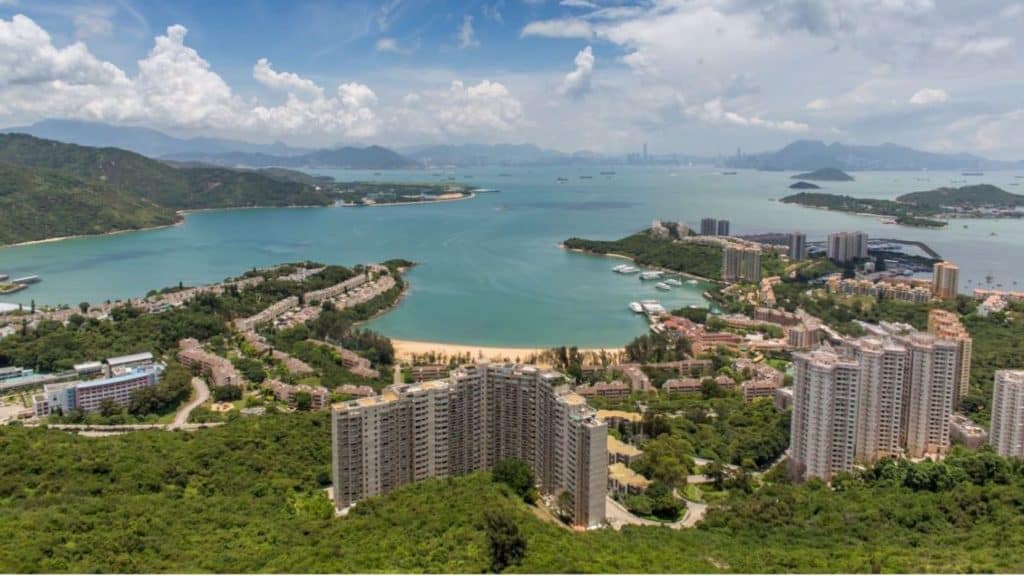
Residents in Discovery Bay is well-known for their advancement in environmental awareness. HKR works closely with residents to organise and participate in green activities, such as Recycling Day, Flea Market, organic farming and the monthly Earth-Hour programme.
In addition, we also lead resident organisations, such as the Environmental Protection Sub-Committee, the Green Lifestyle Membership Scheme, and the City Owners’ Committee. Other activities include updating ideas for the Discovery Bay Green Contractor, providing Tips on Saving Electricity and Water, presenting the Food Ever Waste Never Award, not to mention the Discovery Bay Eco Tour and conducting the Year-End Review on different types of Green Measures.
What do you see will be critical trends impacting/influencing the property market in Hong Kong in 2020/2021?
Jackie Tang: Wellness is becoming a buzz word during the current outbreak. People will undoubtedly pay increased attention to wellness-related building standards and designs that support a health-conscious living style. The pursuit of excellence is key.
Locally and across the globe, uncertainties continue to increase. It is hard to predict when the current pandemic is over. The World Health Organisation has warned that it may be developed into a recurring endemic disease. What I could say is that it will take some time to recover to pre-COVID-19 levels. Investment has to be more cautious.
Technology makes a difference. It enables agility. The right technology application will effectively streamline internal processes and help us keep abreast of the best ways in interacting with stakeholders so as to enhance operational efficiency and improve customer satisfaction.
Yet, technology is developing too fast for most traditional developers to fully understand. Property developers, commercial property owners and property management operators have to keep an open mind and invest money, time and energy in building an inhouse information technology powerhouse to lead the digital transformation.
While technology is essential in driving business efficiency, we should never replace the role human touch played in interacting with stakeholders.
Property development and investment is a capital-intensive industry. At the same time, it has a long development cycle. No one could ever 100% know if they will ride on the best timing and fit in the right economic cycle. We should thus make the best-informed decisions and dare to embrace both the opportunities and risks in the new age of the Next Normal.