




Investopedia refines Original Equipment Manufacturer (OEM) as a company whose goods are used as components in the products of another company, which then sells the finished item to users.
In the computer industry, OEM may refer to the company that buys products and then incorporates or rebrands them into a new product under its own name. Said products could be hardware or software.
The outsourcing of software is an established tradition, one to which Gartner has acknowledged a cloud of secrecy that pervades the industry, adding that the practice of technical support and/or product development/software maintenance activities continues to become an established part of the operating model of most major independent software vendors and OEMs.
The same could be said of the software development efforts of commercial businesses including banks, utility, retail, transportation and logistics. For these organisations, the driver has moved beyond the inconvenience of sourcing talent to the more commercial needs of time-to-market.
The time-to-market requirement is complicated by the sophistication of the technology needed to achieve the outcomes defined by the business. Internet of Things (IoT), for example, is transforming the way manufacturers, banks, utilities and logistics companies are doing business.
ReportLinker predicts that IoT will be a driver of substantial software development in infrastructure, platforms, devices, security, applications and services. OEM is an important go-to-market aspect of IoT for early distribution and as a value-add to IoT product capabilities and/or service offerings.
The report noted that much of IoT will be OEM. It estimated that in 2015, software developers for IoT will have generated revenue of roughly $197 billion through platforms, APIs, applications, controlling systems, security solutions, management and operations. Substantial growth is anticipated through the year 2020.
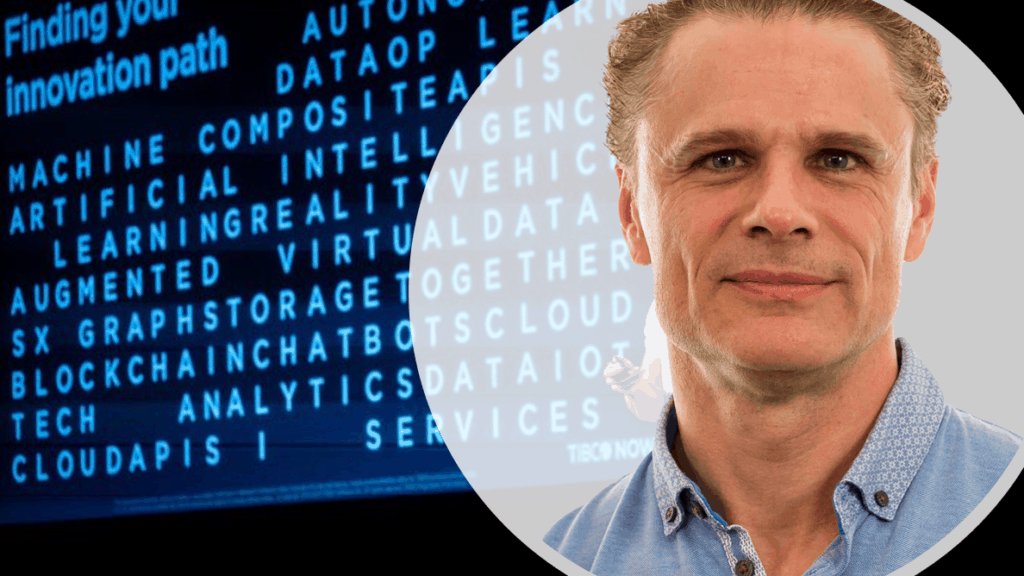
FutureIoT spoke to Nelson Petracek, chief technology officer with TIBCO Software, on the challenges facing businesses that have committed to becoming data-driven and are only realizing that this approach means they must be ready to deliver faster-to-market.
Petracek cites the benefits of modern-day Software OEM practices.
Why is technology complicated “under the hood”? (“under the hood” means how it operates well below the user interface).
Nelson Petracek: Technology “under the hood” can be complicated for a number of reasons – and these reasons don’t even include related issues that can occur due to the ageing processes or traditional organizational structures that support this technology.
For example, most large organizations today do not have the luxury of “starting from scratch” when it comes to building systems and applications, either because they have a number of systems that have grown over time (but are still being used), or their customers have similar legacy environments.
This creates a push-pull conflict as the ability to adopt new technologies can be stifled by the need to expend resources on systems that are “old”, but still critical to business operations.
Furthermore, it is likely that there are more than one of these legacy systems in place, and each of these systems may be built by different people/companies on different technology stacks, using different languages, data stores, and interfaces.
This makes it difficult for these systems to share information, and to do so in a timely fashion.
Can you highlight the problem that technology creates because of different ways of delivering a similar outcome?
Nelson Petracek: Today’s rapid pace of technology change has also resulted in skillset challenges as IT struggles to “keep the lights on” (with old technology) while simultaneously learning and adapting to the vast amount of new technology emerging in the market today.
In some cases, certain technologies are forced into architecture as a result because they are what the team knows or are considered as “cool” by the market.
This “architecture by resume” approach to using technology can result in systems that do not deliver the needed results or are brittle and quickly add to the problem.
Finally, systems today are extremely complicated. There are many, many choices available when it comes to technology, whether one is looking at infrastructure, data stores, languages, development frameworks, deployment strategies, or methodologies.
Organizational systems and data are also now typically distributed, deployed in a hybrid or multi-cloud context, include many different sources and forms of data, and are required to deliver functionality to end-users at a rapid pace.
This environment is more complex than the architectures of the past and contributes to the challenges we see in organizations today.
Can you cite an example of this?
Nelson Petracek: One good example we can share is the case story of Vestas that spins up wind generation with TIBCO Spotfire.
The company is a global market leader in the manufacturing and servicing of wind turbines and they needed a partner with the capability to unlock the vast amount of data in their environment, improve their business case certainty, and subsequently reduce the cost of energy for customers.
To improve access to data, Vestas’ users wanted more of the smart app experience, with dropdown menus and simple interactions via graphs powered by the systems behind them. They wanted this for advanced analytics, as well.
They did not want to have a pre-configured dashboard – they wanted to “drag and drop” and dynamically interact with the analytics, like what you can with TIBCO Spotfire.
Upon partnering with TIBCO, Vestas did a large proof of concept and built 12 key use cases with a team of four. They completed the POC within three months, and it met their expectations.
Various aspects of the platform were utilized, including Spotfire templates, data connections with enterprise governance, and self-service advanced analytics using R libraries served via TIBCO Spotfire Statistical Services.
As a result, Vestas was able to improve workforce productivity, meet real-time demand, and democratize data across the enterprise. Before Spotfire, an analyst would take a request, do the analysis, and send it out by email.
When the email arrived in the salesperson’s inbox, it was already too late because the requirements had changed. The sales guy wasn’t happy because he sits there with a million-dollar contract and doesn’t feel he has been taken seriously.
With on-demand analytics powered by TIBCO, the salesperson instead does the whole analysis. He can sit with the client and answer questions. Suddenly, the process is being supported with what appears to be a simple application—but actually, what goes on is a very complicated Monte Carlo simulation on 10 years of data, with the biggest wind data asset in the world—but he doesn’t know that. With Spotfire, all that is possible.
By democratizing data across Vestas, the company now sees use cases in new areas: forecasting of contractual losses for prioritizing and planning service resources, social analytics for understanding market influences, and resource management analytics to plan and forecast technology resources.
Assessing the trends
Gartner says embedded software or Software OEMs are the foundational blocks that enable the digitization of the physical world, including IoT, and play a role that cannot be overemphasised.
The analyst noted that software for embedded systems are moving up the value chain and are expected to perform “complex multitasking operations running on high-performance multicore MCUs and microprocessors (MPUs), often demanding low latency, with the deterministic and real-time operation. Increasingly advanced analytics techniques, leveraging deep neural networks (DNNs) must be integrated.”
Such capabilities would mean higher costs, both to build and maintain if the strategy is to do things internally.
The Gartner Hype Cycle for Embedded Software and Systems, 2020, reported that delivering solutions that are both secure and capable of being remotely updated (and managed), while supporting multiple operating systems and processor types, presents an increasingly complex challenge.
And when you consider time-to-market will define revenue gains or opportunity loss, would you build or buy?