FutureCOO

Tag: IoT chipsets

  • Soracom gears up for iSim deployments

    Soracom gears up for iSim deployments

    Soracom has expanded partnerships to support commercial deployment of next-generation iSIM (Integrated Subscriber Identity Module) for Soracom customers.

    Ken Tamagawa, Soracom

    In June 2021, Soracom completed a joint iSIM Proof of Concept in collaboration with Sony Semiconductor Israel (Sony), a leading cellular IoT chipset provider, and Kigen, which focuses in secure authentication for cellular IoT devices. These partnerships have now been expanded to include new iSIM-compatible modules from Quectel and Murata.

    “iSIM technology matches perfectly with Soracom’s Subscription Containers feature, which lets users download new profiles over the air as needed,” said Ken Tamagawa, CEO and co-founder for Soracom.

    Soracom is a technology partner to more than 20,000 startups, SMBs, and enterprises, connecting more than 5 million IoT devices globally. The company offers robust solutions specifically designed to make it easy to build, operate, and scale IoT deployments.

    “iSIM represents the future of SIM technology, and this collaboration puts our customers at the leading edge of IoT development.”

    Ken Tamagawa, Soracom

    A game changer in IoT development

    Vincent Korstanje, Kigen

    iSIM technology offers significant advantages over existing SIM and eSIM technology, including reduced physical size, simplified circuitry, minimal board footprint, improved processing capacity, greater energy savings, higher security, lower cost and simplified commercial distribution.

    The iSIM standard integrates communication modules, SIM and eSIM functions into a single System-on-Chip (SoC) device and offers a hardware-secured area within the chip for optimal data integrity.

    “iSIM technology is a game changer for anyone who wants to secure data originating from connected devices whether it’s for delivering unique customer experiences or for AI solutions.”

    Vincent Korstanje, CEO of Kigen.

    “The commercial availability of iSIM on Soracom’s network is the result of extensive collaborative testing of the Kigen iSIM OS using the market-leading modules and chipsets,” he added.

    Dima Feldman, Sony

    According to Dima Feldman, VP of product management and marketing at Sony Semiconductor Israel, noted that the development of iSim technology will greatly contribute to the evolution of cellular IoT devices.

    “The combination of Soracom’s LPWA modules and iSIM technology accelerates implementation efforts for customers, allowing them to develop advantages in cost, size, security, and power consumption.”

    Increased interest

    Customer interest in iSIM-compatible products has increased steadily since 2021 and module vendors have expanded related product offerings.

    Soracom’s expanded partnerships will allow interested customers to secure the Quectel BG773 and Murata Type 1SC iSIM-compatible modules for use in IoT deployments.

    Akira Sasaki, Murata

    “This product is a compact, power-saving, low-cost cellular LPWA module that can be used in a variety of IoT applications,” said Akira Sasaki, general manager, communication module division, Murata Manufacturing.

    “Together with leading companies in the cellular IoT industry, we have developed a solution that will let our customers bring a new generation of IoT products to market.”

    Akira Sasaki, Murata
    Michael Wallon, Quectel

    Michael Wallon, SVP sales APAC + ANZ, Quectel Wireless Solutions, said: “By combining our iSIM-enabled communication modules with the Soracom connectivity platform, customers can easily implement integrated, cost-effective, sustainable and secure IoT solutions at scale, while streamlining their global IoT deployment and paving the way to a smarter world.”

  • Qualcomm’s new IoT chipsets to power next-gen IoT devices

    Qualcomm’s new IoT chipsets to power next-gen IoT devices

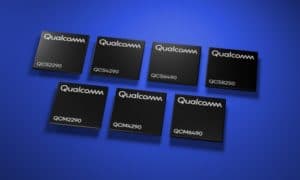
    Qualcomm on Tuesday released seven new IoT chipsets for next-generation devices targeted for key markets including transportation and logistics, warehousing, video collaboration, smart cameras, retail and healthcare among others.

    The introduction of the new family of products comes a little more than two weeks after the company launched its first IoT modem solution that is equipped with 5G connectivity and optimised for Industrial IoT (IIoT) applications. The Qualcomm 315 5G IoT Modem-RF System is a modem-to-antenna solution designed to support the IoT ecosystem in building upgradeable LTE and 5G devices for IoT verticals.

    The newly released chipsets span across entire market segments from entry level to premium tier, and purpose-built to support emerging IoT devices and solutions designed for industrial and commercial applications.

    “We have two variants of products. One classified  under the QCS family, which is an application processor with WiFi connectivity; and the other is classified under the QCM, which is an application processor with an integrated cellular connectivity,” said Nagaraju Naik, senior director for product development at Qualcomm.

    He added: “With the understanding of the IoT portfolio across industrial and enterprise applications, there is a need for extended hardware availability as well as extended software support. So, we have defined that as a programme. All the new chipsets are extended life chipsets with a minimum hardware availability of at least eight years; and we have an extended software support programme that is very well established, which offers security bug fixes on a quarterly basis.”

    The new Qualcomm IoT chipsets are:

    • Qualcomm QCS8250 | Target applications: connected healthcare, digital signage, retail, and video collaboration

    This premium-tier offering is optimised to deliver maximum performance to enable compute intensive AI at the edge with support for Qualcomm® Wi-Fi 6 solutions and 5G connectivity. It offers a new Neural Processing Unit (NPU) for ultra-intuitive AI in addition to machine learning for compute-intensive IoT applications to enable smart cameras, video collaboration, AI hubs, connected healthcare and smart retail. Purpose-built for industrial and commercial applications, this platform delivers ultimate performance experience with flexible options enabled by Qualcomm’s 3rd party ecosystem to accelerate deployment and commercialisation at scale.

    • Qualcomm QCS6490/QCM6490 | Target applications: connected healthcare, logistics management, retail, transportation, and warehousing

    With the Kryo 585 CPU architecture this solution delivers powerful performance and is purpose-built for industrial and commercial IoT applications such as transportation, warehousing, connected healthcare, logistics management and across retail point of sale (POS) kiosks. Equip to support 5G mmWave/Sub-6 GHz and Wi-Fi 6E, this solution helps enable the latest generation of ruggedised handhelds and tablets, industrial scanners, and human machine interface systems. Through powerful connections, reduced latency, along with dynamic triple ISPs and advanced Edge-AI and compute based on 6th generation Qualcomm AI Engine, this solution delivers astonishing performance at reduced power compared to previous generation solutions.

    • Qualcomm QCS4290/QCM4290 | Target applications: cameras, industrial handhelds, and security panels

    These chipsets offer maximum mid-tier benefits. With the Kryo260 CPU architecture for increased speeds and robust on-device performance, in addition to the 3rd generation Qualcomm AI Engine, this platform delivers powerful performance, dynamic camera capabilities and broad connectivity options (LTE Cat13, Wi-Fi 6-Ready),ideal for industrial and commercial IoT applications such as industrial handhelds in logistics and warehousing, security panels and cameras. For increased intuitive on-device intelligence, devices based on this new solution will help enable productive and efficient work environments.

    • Qualcomm QCS2290/QCM2290 | Target applications: camera applications, industrial handhelds, retail and tracking

    These are robust entry-level offerings, enabling reliable performance and power-conservation with LTE connectivity, upgraded features and memory support for low power consumption. Equipped with the Cortex A53 CPU architecture, the entry-level platform is a cost-effective solution, delivering greater performance, higher graphics capabilities, better quality images, and improved power performance. This platform is well-suited for, retail point-of-sale (POS),industrial handheld, tracking and camera applications. Also, QCS2290/QCM2290 baseband chip is pin-to-pin compatible with QCS4290/QCM4290 which helps customers use hardware and software across various IoT devices to reduce cost and time to market.

    The Qualcomm QCS8250, Qualcomm QCS4290/ QCM4290, and Qualcomm QCS2290/ QCM2290 solutions are available now. The Qualcomm QCS6490/ QCM6490 solution are expected to be available in second half of 2021.

    Enabling the IoT ecosystem

    With its latest family of IoT chipsets, Qualcomm hopes to enable its more than 13,000 IoT customers accelerate their development of connected products.

    “We uniquely positioned to lead the IoT ecosystem forward with our systems-level approach. Along with the recently announced Qualcomm315 5G IoT modem, these new IoT solutions further exemplify our commitment to driving global digital transformation and providing a portfolio of solutions to transform industrial and enterprise IoT applications to achieve cutting-edge performance and seamless connectivity,” said Jeff Lorbeck, senior vice president and general manager of connected smart systems at Qualcomm .

    He added: “We believe in the power of technology to enrich lives through purposeful innovation with solutions to support the ecosystem in reimagining how the world connects, works and communicates. These new IoT solutions are a step towards achieving that goal.”

    A number of the company’s customers and partners have expressed optimism about the new IoT chipsets.

    “The announcement of Qualcomm Technologies’ newest IoT solutions is an exciting step forward in the global proliferation of next-generation IoT devices. Coupled with Fibocom’s end-to-end IoT modules and wireless communications solutions, these new solutions will enable powerful, intelligent, and revolutionary IoT solutions across a variety of industries and vertical applications,” said Lingpeng Ying,chief executive officer, Wireless Inc.

    “As a leading IoT solution distributor in Taiwan, we have strong application insights and support customers from concept to design to manufacturing. The Qualcomm QCS8250 is a leading AI computing platform, and we are pleased to be collaborating with Taiwan customers to enable the high-performance, low-power computing IoT platform in 1H2022, including a SMARC module from biases and video conference solution from Aver,” said Eric Cheng, president, Hongtech Electronics.

    “Qualcomm Technologies’ newest IoT solutions are a strong step forward for the retail market and IoT ecosystem to enable the global proliferation of next-generation devices. We are proud to work with Qualcomm Technologies to continue to enable the growth of this market and ecosystem.” said Tom Luo, executive vice president, PAX Computer Technology (Shenzhen).

    “Based on our long strategic relationship, we congratulate Qualcomm Technologies on the launch of these cutting-edge solutions,” said Julie Johnson, vice president of product management, Zebra Technologies. “This innovation gives us more flexibility than ever before to build the right technology solutions for our customers based on their specific needs.”


  • MediaTek unveils new IoT program to speed up design of smart connected devices

    MediaTek unveils new IoT program to speed up design of smart connected devices

    Taiwanese fabless semiconductor company MediaTek is collaborating with global design houses in a new program that would develop AI-enabled chipset platforms for companies innovating products across the intelligent devices market.

    The platform, based on open and industry standard software and hardware, is founded on MediaTek’s chipsets that power most voice, smart speaker, display-centric and AI-infused devices in the market.

    MediaTek said under its new rich IoT program, it will be unveiling new chipsets that include edge AI technology for voice, display, object recognition and other features needed for today’s smart (Internet of Things) IoT devices.

    Its partners, which include design houses BayLibre and StreamUnlimited and others in China, Europe and the US, support the MediaTek chipsets with industry standard software and offer the needed hardware, software and technical support for companies designing AI devices with MediaTek’s AI IoT platforms.

    “The Internet of Things has entered its next phase. AI features are being integrated into nearly every type of consumer device imaginable. That means connected devices now require a processor to support AI applications, rather than a more limited microcontroller unit that has been historically used,” said Jerry Yu, MediaTek Corporate Senior Vice President and General Manager of the Intelligent Devices Business Group.

    Rich IoT program

    According to industry research group Market and Research, the AI IoT market is poised for growth as connected devices need to do more processing at the edge and are being integrated into new product lines.

    Moreover, IoT will represent 83% of the entire AI chipset market by 2023. And globally, AI in the embedded IoT devices market will approach $26 billion by 2023.

    MediaTek said it will be initially focused on three primary AI IoT segments with its rich IoT program: voice enabled devices, display and screen devices, and AI Vision Devices. Its collaborators will be adding support for the program.

    BayLibre, for one, authors board support packages and develops Linux & U-boot drivers for the semiconductor industry. It offers the open source Rity SDK for a full voice assistant-enabled audio solution.

    StreamSDK, on the other hand, is a smart audio solution that powers multiple tier-1 voice assistant and streaming devices.

    Jawad Haider, Head of Business Development and Partnerships for North America at StreamUnlimited said the company is adding dedicated IoT functionality to its SDK to enable a plethora of new use cases centered around voice assistants, music streaming, and smart home functions.

    Seeed Studios, for its part, helps produce and provide global access to the next generation of AI enabled IoT products through its manufacturing and distribution services.   

Subscribe