





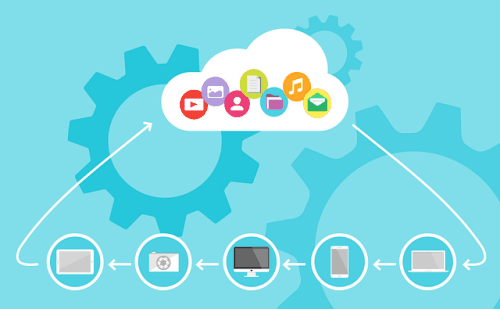
The emergence and success of the IoT and cloud over the last decade is unquestioned. As more data is moved to the cloud, new IoT applications are brought to market. Due to the market acceleration factors, the global IoT market forecast has been revised upwards and it is now expected that the total market will reach US$1.567 billion by 2025. IoT and cloud technology remain intertwined as a lot of IoT applications and solutions are primarily created using the cloud offering. The IoT market will continue to grow quickly, so will cloud too.
IoT deployment is finally making headway with both private and public sectors in various industries in the world, the Asia-Pacific in particular. It is nearly impossible to read any current IT publication that does not cover the growth, innovation and emerging use cases that are enabled by cloud. However, apart from that, the Managed Cloud Service Provider (MSCP) is not to be overlooked, it is in fact essential and often the better choice for a significant majority of the IT market.
Public cloud infrastructure requires specific expertise
According to my fellow colleague, Danny Allan, vice president for product strategy at Veeam, many organisations will often start with the false premise that they can simply pick up the on-premises infrastructure and move it over to the hyper-scale public cloud. While this has often been the promise and the general infrastructure is similar, the reality is that many basic elements such as control planes, networking and security are different enough that challenges very quickly emerge.
Allan further notes that choosing a MCSP helps in one of two ways: the hosted service environment can closely mirror the on-premises environment, or a managed service can effectively broker the public cloud and introduce the cloud expertise necessary to integrate two different environments. In an ecosystem where time-to-offering is an essential competitive advantage, this value cannot be under-estimated. In fact, it is very likely that the MCSP community will evolve into a front line brokering of the hyper-scale public clouds, while facilitating and managing the transition and hybrid environment.
Cloud economics need to be effectively managed
Another key point raised by Allan is the ability for cloud to drive profit is based on the ability to layer in margin. While the public cloud can be very effective for elastic workloads with a high degree of variability, placing workloads in a remote location or for taking advantage of a pre-configured service, they can be significantly less cost effective for static workloads with predictable infrastructure needs. As the various public clouds all vie for market dominance and customers choose which workloads are best suited to the public cloud benefits, MCSPs offer the ability to abstract the workload from the public cloud, while closely monitoring the cost characteristics and shifting the data and service based on the customer ROI. This is a distinct and definite value add that most customers are unable to measure and recognise.
Many services offer a superior end user experience in a decentralized model
My colleague Danny and I are both firm believers in that there is a simple truth in the IT ecosystem: network matters. Organisations often find that two of the limiting factors in a service offering are the size of the bandwidth and the latency between the service offering and the user. While it is sometimes possible, though expensive, to increase the size of the bandwidth, it isn’t possible to accelerate the speed of light. These two limiting factors have an absolute impact on services and have led to the creation of entire technology categories such as Content Distribution Networks (CDNs). If it were possible to send data from a few centralized hyper-scale distribution nodes, there would be no need for a CDN. And yet CDNs have thrived and continue to thrive. Why? Network matters and decentralised models can offer a superior experience.
It is clear that many of the hyper-scale public clouds have recognised this and include offerings that place small amounts of compute at the edge — either in the customer data center or in a regional partner location. While this provides the opportunity to improve service delivery, the business model of the hyper-scale public cloud is not aligned with decentralized networks as they attempt to leverage economies of scale to keep prices down. This leaves an opportunity for the MCSP to add infrastructure in a decentralized model loosely coupled with services from a central public cloud.
Customers should focus on their core business
Lastly, Allan notes that the decline of many organisations is often down to a lack of focus. They attempt to manage and execute too many things simultaneously. By partnering with a MCSP, they are often able to consume an IT outcome with a Service Level Agreement (SLA) — thus freeing precious internal resources to focus on the core business tasks. It has been broadly recognized that many IT functions such as email and communication services are frequently delivered through a trusted partner and extending this model to infrastructure and platform services makes good business sense. The MCSP partner is able to deliver on their core competency, while the business is free to focus on theirs.
It’s only too clear that the industry is going through a transformation with the adoption of cloud. However, it would be a mistake to believe that the net result of this transformation is that organizations should solely examine the major public cloud providers. A trusted MCSP partner who understands your business is often the smarter choice in this cloud evolution.
Danny Allan, vice president of product srategy at Veeam also contributed to this article