




Technology has transformed how we manufacture goods over the last couple of centuries, where hydro and steam power coupled with mechanisation was the first pioneering elements of our first industrial revolution.
The last few years have been a speeding bullet of change in technology, with sophisticated and human-centred software development, faster, smaller and more efficient semiconductors, and a race towards more miniaturisation of components.
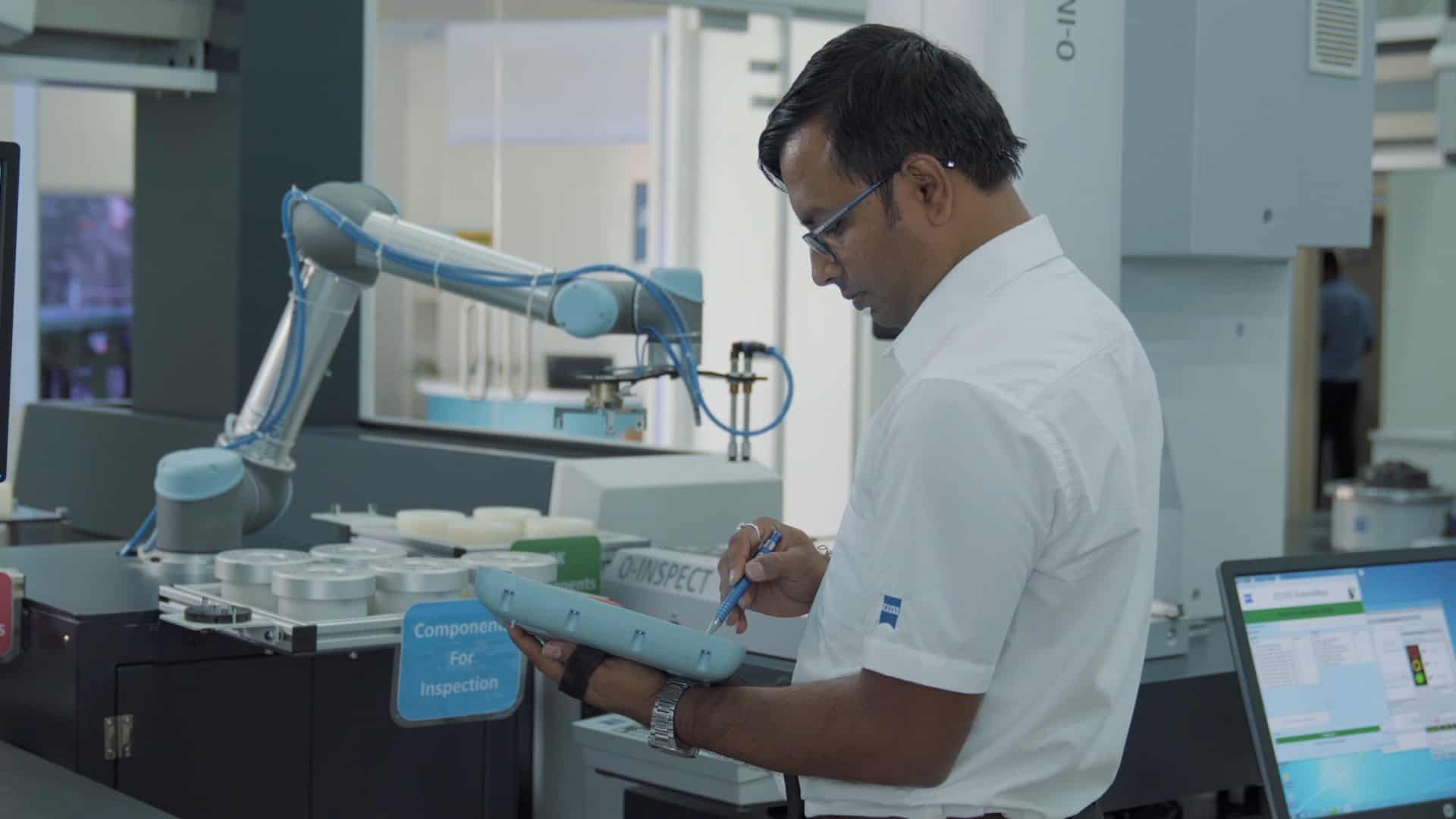
With such advancements, the two great pillars of Industry 4.0, robotics and the Industrial Internet of Things (IIoT), are rapidly accelerating and converging together. In the world of robotics, sophisticated and elegant collaborative robots (cobots) are taking more stage space as Industry 4.0 shapes up to radically permeate and transform many assembly and manufacturing operations worldwide.
Now, more and more work done by humans is relegated to machines, with automation brought about by insanely fast computers and precision robotics, supplemented by rapidly improving Internet, IIoT and artificial intelligence (AI).
But we humans never stand still or simply gawk at our successes. With mobile telephony moving from 4G to now 5G, and 6G already in the works, it is the same with Industrial transformation. Even as Industry 4.0 technologies are shaping and reshaping industries now, innovators and adopters are already preparing for the next quantum jump of a radically different Industry 5.0.
Fortunately, despite what movies depict, we humans remain at the helm of all technologies, and the human touch will continue to stand on the watchtower in the future factory of 2035, in the age of Industry 5.0
Dispelling the myth about robots and jobs
With global trade disputes, terrorism and pandemics enveloping the world, the economic and business climate have faced the greatest challenge of our time. In the midst of these, businesses have tanked and millions of jobs are lost. And the tide does not stop here.
There is, therefore, every fear amongst many, that robots in the age of Industry 4.0 with all their interconnectivity to the cloud, with intelligent use of data, may simply replace many human workers. After all, robots never need a salary nor do they take lunch breaks.
But is such a myth true? Fortunately, no. In fact, robots create new jobs for humans.
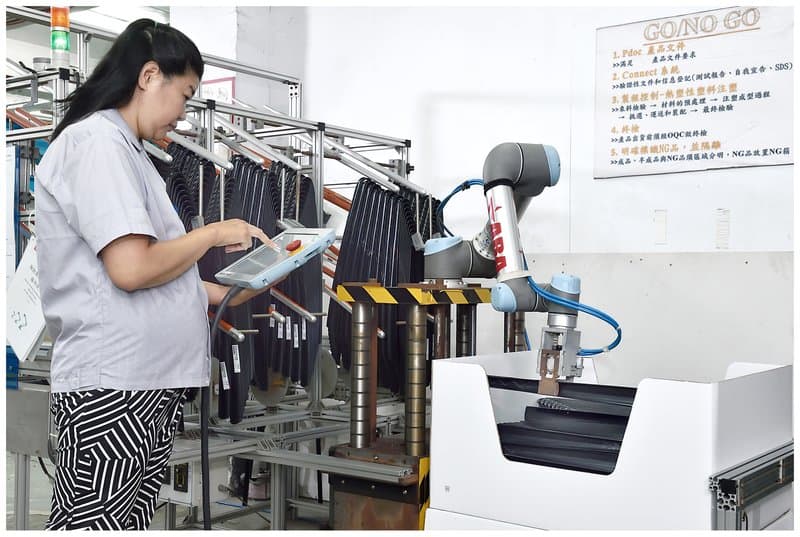
According to a recent Harvard Business Review article on automated tasks, 20% to 80% of a given job may have tasks that can be automated, but no jobs can be 100% automated. Despite all the advances, robots will not replace humans completely.
Businesses that deploy robots notice an increase in productivity in the form of throughput, and realise greater revenue, and therefore able to employ even more human workers. Robots are now coupled with the human mind through advances in AI.
With regulators seeking to protect employment and business viability worldwide in a pandemic, there is a need to improve productivity, be viable, and retain employment. The rise of cobots is completely compatible with these holistic and noble goals in Industry 5.0, where cobots work collaboratively with human operators where the sum of the two will be a multiplier to achieve much greater outcomes.
Scaling mount “Industry 5.0” like a champ
IIoT has been pivotal in the evolution of Industry 4.0, being applied in many facets of facilities to efficiently increase automation and even taking care of functions such as industrial safety and security.
In “lights-out” factories, manufacturers can produce goods fast, at consistent quality, at affordable costs, and with little or almost no human intervention.
Such a trend has gained traction in the past up until recent years. The onset of Industry 5.0 changes that, where a change in consumer demand has emerged, demanding craftsmanship and personalisation.
For example, watches. It used to be the norm to simply purchase a watch you like off-the-shelf. Today, consumers are demanding customised watches in terms of bezels, watch faces, and straps. To go a step further, even personalisation of personal information can be done.
This is the age where consumers will demand products that stand out, and are personally identifiable as their own, where individuality rules.
Therefore, Industry 5.0 heralds the age of mass personalisation, where a factory can deliver highly customised and personalised products to consumers even a huge demand for products flood in, something traditional mass production factories or boutique workshops can never fulfil.
Factories of 2035 will be able to do all these, and yet promise approachable prices for products in any quantity, with individualised products. The symbiosis of IIoT, AI, cobots and skilled human operators, will become the ecosystem to bring about this new frontier of meeting customer needs.
The rise of human workers in Industry 5.0
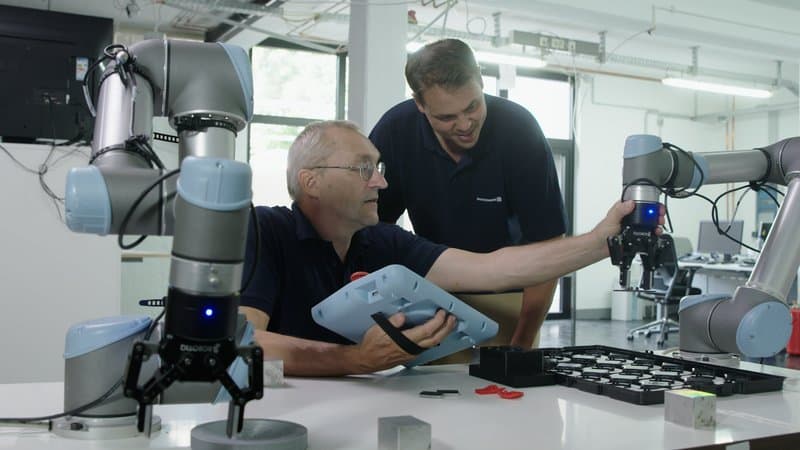
Every government worldwide is rallying the war cry of skill upgrading for people. This is the best time to get as many people acquainted and experienced with the new frontier of Industry 5.0. The days of the old-school line worker is over.
The dangerous, boring and repetitive tasks are being relegated to robots, machines and computers. Humans will add value to the assembly and supply chain with craft, human senses that are impossible to replicate by machines for assessment and adjustments and to understand materials and processes. Humans will increasingly take on the role of experts and assessors, lending a degree of human touch as demanded by people.
Welcome to 2035
Industry 4.0 and “lights-out” factories will become the foundation of manufacturing by 2035. There will still be millions of products that can be simply manufactured without the need for human intervention then.
There will also be many more Industry 5.0 factories by 2035, where humans with unique talents like creativity, artistry, materials and process knowledge, discerning tastes, an understanding of cultures and customs, and complex judgement will be employed.
The jobs in 2035 will be nothing like the jobs we see today. It will be the age where we finally see people doing jobs they like or love to do, rather than what a majority of people today do even as they hate their jobs but simply because they need the money.
And because of this fundamental shift, jobs will be more humane and we can look forward to a more utopian work ecosystem where talents and knowledge are valued and fulfilled. Industry 5.0 will be the perfect marriage between humans and autonomous machines.
We can certainly look forward to a better world. Even now, we are already seeing Industry 4.0 as a partnership between IT and manufacturing operations. We are not looking back. We re speeding fast forward beyond the four industrial revolutions, to embrace Industry 5.0.
The smart factories of 2035 will have collaboration at its soul, between humans and machines, where machines will do the strenuous and repetitive work, while humans act as the “creative architects”.
Welcome to 2035.