




Warehouse competitiveness in Asia will increasingly depend on connected software, flexible automation and the ability to orchestrate people, robots and data across sites.
The IoT Analytics’ Intralogistics Market and Technology Trends Report 2026 estimates the global intralogistics market at US$96 billion in 2025. It also forecasts the market to grow at a CAGR of 6.7% reaching US$133 billion by 2030.
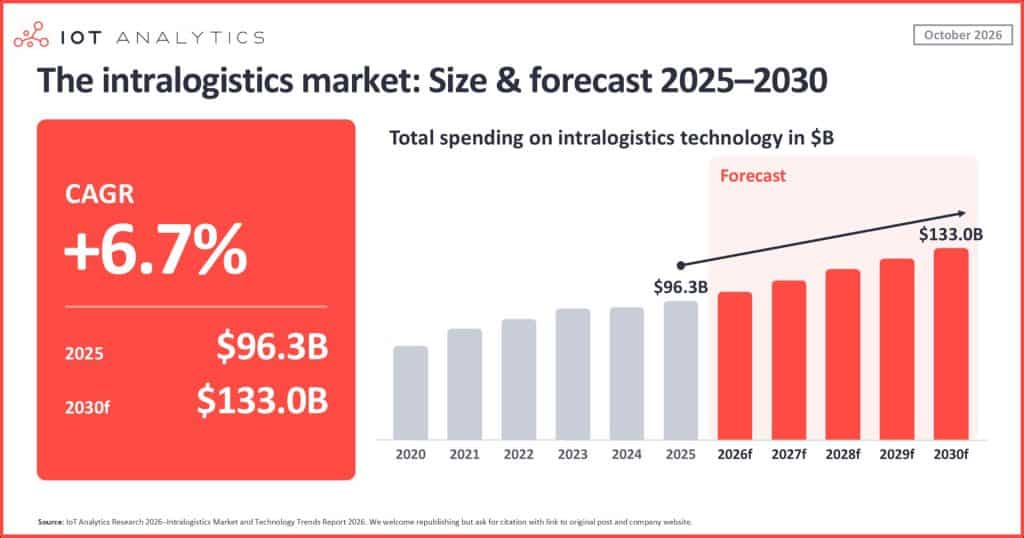
The report identifies labour shortages, delivery-speed expectations, cost pressure, flexibility needs and safety as the main forces pushing warehouses towards automation.
Software and mobile robots are expected to be the market’s principal growth engines with Intralogistics software spending forecast to rise from US$6.3 billion in 2025 to US$10.8 billion by 2030, an 11.4% CAGR.
The report also forecasts spending on mobile robots to nearly double from US$4.3 billion to US$8.4 billion over the same period. Included in this category are autonomous mobile robots and automated guided vehicles.
For Asia-Pacific operators, these trends arrive amid persistent labour constraints and intense e-commerce competition. IoT Analytics reports that warehouses with labour-intensive picking operations experience 200% to 300% annual staff turnover, while retirements are outpacing new entrants to the workforce.
“When we talk to our customers about what keeps them awake at night, the one theme that keeps coming up again and again is a lack of skilled workers,” said Mattias Allring, director Strategic Innovation at Toyota. “The outflow into retirement is accelerating while at the same time the inflow from kids to working age is diminishing.”
Notable trends predicted/observed in the report, include:
The shift towards modular automation: Tariffs, supply-chain disruption and changing order profiles are prompting operators to favour systems that can be redeployed or reconfigured, rather than committing to rigid multi-year projects that can cost US$20 million or more.
AI use is moving into operational decision-making: IoT Analytics identifies AI agents that handle recurring control-desk tasks—such as labour allocation, replenishment and maintenance scheduling—as a key trend. Human supervisors would still set priorities and manage exceptions.
The emergence of vendor-agnostic orchestration layers: Sitting between warehouse management systems and automation equipment, these platforms allow operators to add robots from different suppliers without rebuilding integrations each time, an increasingly important requirement as mixed fleets become more common.
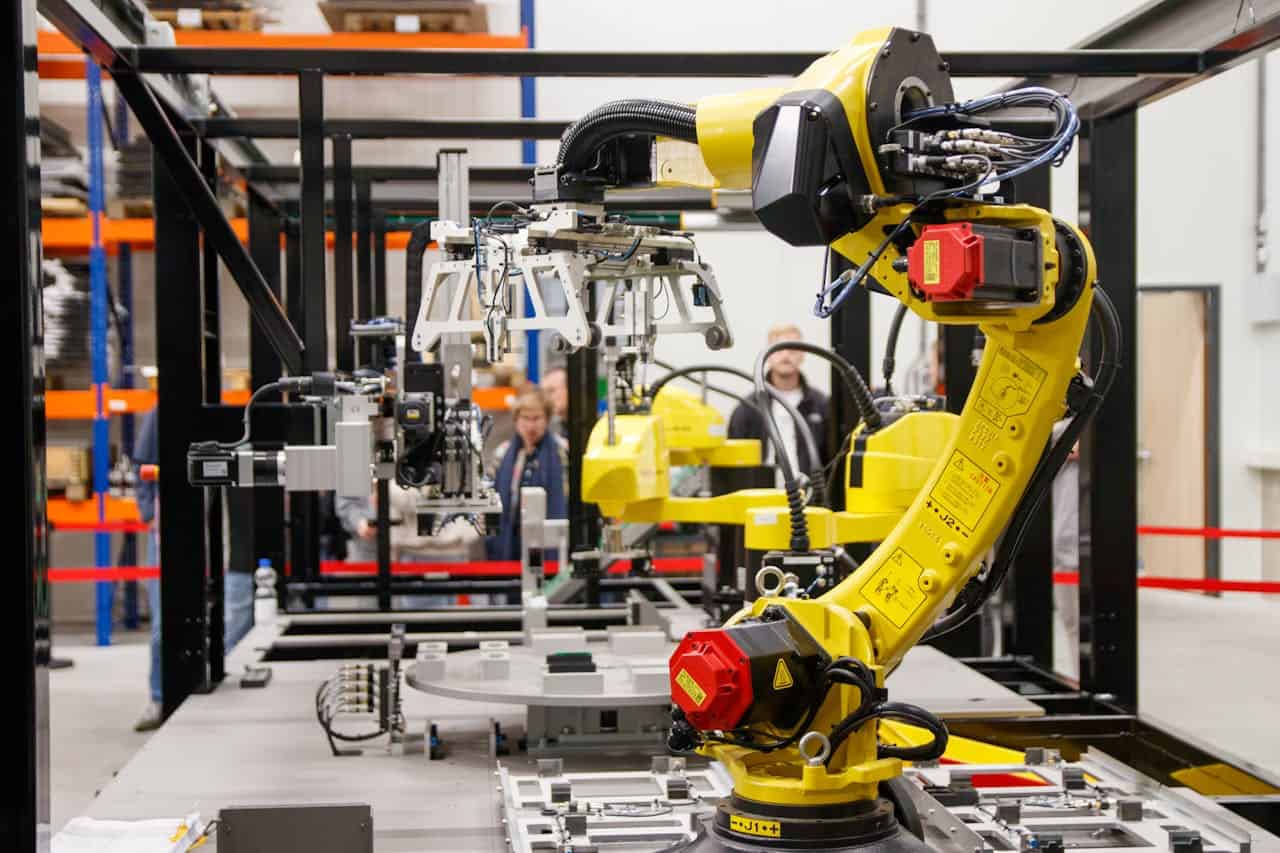
The use of autonomous mobile manipulator robots: which combine a mobile base with robotic arms to transport, pick and handle goods with less manual intervention.
IoT Analytics also notes intensifying competition from Chinese original equipment manufacturers, which are improving hardware, expanding local service and reducing prices. This pressure is expected to push global vendors to differentiate through software, services and interoperability.