




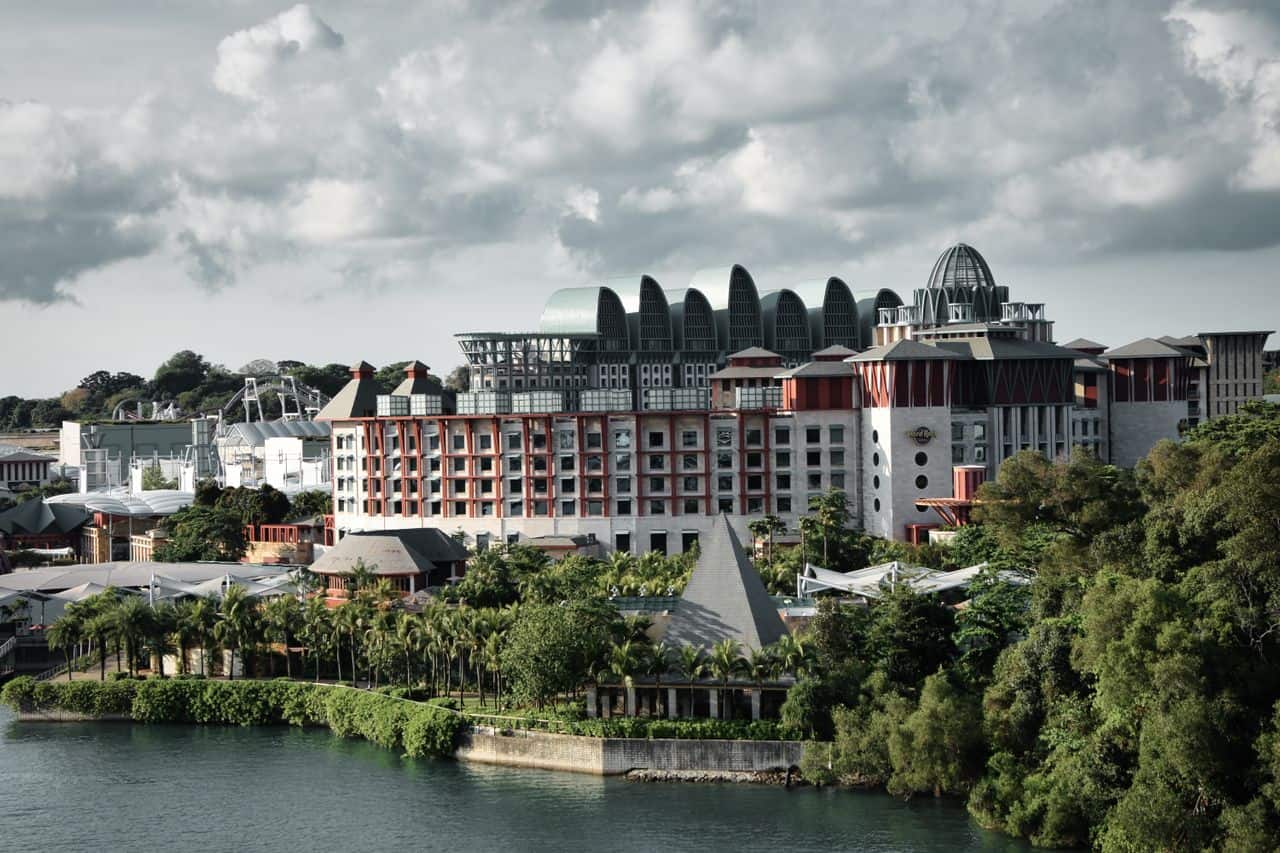
Resorts World Sentosa (RWS) and Honeywell Technologies have launched a co-innovation initiative to deploy artificial intelligence (AI) and predictive optimisation across the Singapore integrated resort’s building and cooling systems.
RWS will become the first tourism destination in Singapore to adopt predictive optimisation technologies for district cooling, aiming to reduce energy use while maintaining guest comfort across hotels, attractions and public spaces.
Cooling is among the largest and most complex energy demands for major resorts. The initiative is designed to anticipate demand and coordinate equipment before conditions change, helping RWS avoid producing more chilled water than necessary and operate its district-cooling plant more efficiently.
From automation to autonomy
The programme builds on a 2023 partnership in which Honeywell implemented Singapore’s first large-scale cloud-based building management system at RWS. That deployment included smart dynamic energy optimisation, fault-detection diagnostics and reliability-centred maintenance across the 49-hectare resort.
The new initiative adds advanced analytics, artificial intelligence and future autonomous-building capabilities to that foundation. It will use Honeywell’s Singapore Sustainable Buildings Centre of Excellence, established with support from Singapore’s Economic Development Board, to develop and test technologies in a complex hospitality and entertainment environment.

Munish Suri, president of building automation for India and Asia-Pacific at Honeywell Technologies, said the next stage of building efficiency requires interconnected systems to work intelligently together.
“The next frontier in building efficiency is not simply automating individual systems such as HVAC, chillers and district energy infrastructure. It is enabling interconnected systems to work intelligently together, continuously and proactively optimising energy use as conditions change.” Munish Suri
Practical deployments
The initiative includes three programmes. The first uses AI to continuously adjust heating, ventilation and air-conditioning systems to reduce energy consumption while maintaining indoor comfort; it is already deployed at Resorts World Convention Centre and Illumination’s Minion Land at Universal Studios Singapore.
The second programme applies predictive controls to the district-cooling plant, forecasting cooling demand and determining which equipment should run and when. The third uses Honeywell’s Forge platform to consolidate energy data, identify potential waste and provide facilities teams with actionable recommendations across the resort.

Kess Chiang, senior vice-president of resort services at RWS, said facilities management should anticipate changing conditions rather than simply respond to faults.
“Facilities management goes beyond fixing things when they break,” he said. “It means staying ahead, using technology to make the resort more comfortable, reliable and efficient for every guest.”
Singapore decarbonisation
RWS is targeting carbon neutrality by 2030. Its earlier Honeywell deployment was designed to deliver up to 4GWh of annual energy savings from the air-conditioning and mechanical ventilation system while maintaining guest thermal comfort in Singapore’s tropical climate.
The latest initiative positions RWS as a test bed for AI-enabled building operations in Asia, where high cooling loads, humidity and 24-hour hospitality operations make energy optimisation particularly challenging.