





The GlobalDatas report, The Constraints Reshaping Data Center Development, warns that environmental, social and governance pressures, grid bottlenecks and supply-chain constraints are delaying data centre development and could slow the rollout of AI infrastructure
The energy angle
The consultancy firm forecasts that annual data centre power consumption will rise from 590 terawatt-hours in 2025 to 1,520TWh in 2030. That would take data centres from 2.1% to 4.5% of global electricity consumption over the period.
The report finds that most announced data centre projects remain in the planning stage. Projects that broke ground between the third quarter of 2025 and the third quarter of 2026 waited an average of just over two years from announcement to construction, compared with about 18 months for projects started between the first quarter of 2020 and the second quarter of 2025.
For Asia-Pacific, where AI adoption, cloud expansion and digital infrastructure investment are accelerating, the findings highlight a growing tension between compute demand and the availability of power, water, land and skilled labour.
Local opposition and water stress
Research reveals that data centres are increasingly located in water-stressed areas, while the construction of facilities and the energy-intensive training and operation of large language models add new sources of emissions. Concerns over noise, land use and rising electricity bills are also hardening public opposition.
“Data centers are increasingly located in water-stressed areas, and their construction, along with the energy-intensive training and running of large language models are adding new sources of emissions,” said Martina Raveni, senior analyst in GlobalData’s Strategic Intelligence team.
She cited Data Center Watch data showing that at least 75 US data centre projects worth approximately US$130 billion were blocked or delayed in the first quarter of 2026 alone. Similar backlash are emerging in markets like Chile, Japan, South Korea, and the UK.
Grid access becomes bottleneck
Grid access has become a major constraint. Citing the International Energy Agency’s 2026 Electricity Outlook, GlobalData said more than 2,500GW of renewable, large-load and storage projects are waiting in connection queues worldwide. Developers in Europe’s main data centre hubs can face waits of seven to 10 years.
Building new grid infrastructure can take five to 15 years, compared with one to three years for a data centre. Grid congestion is pushing some operators towards on-site gas power, which GlobalData warns could increase emissions even as electricity grids decarbonise.
Supply chains under strain
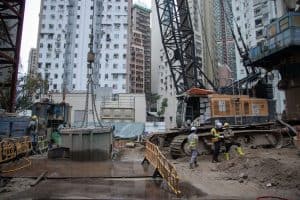
Data centre construction also depends on constrained supply chains. GlobalData said a single hyperscale facility can require up to 50,000 tonnes of copper, while AI data centres need 10 to 20 times more fibre than traditional builds at a time when fibre manufacturers are already operating at capacity. Shortages of electricians and other skilled trades are further delaying projects.
Operators are responding with closed-loop cooling, water stewardship commitments, diversified power supplies using renewables, battery storage and fuel cells, and circular-economy practices to extend equipment lifespans. Community engagement and workforce development are also becoming core requirements for project delivery.
“Unless grid access, equipment supplies, and construction timelines become more predictable, AI progress will be shaped as much by power and hardware logistics as by algorithmic innovation,” Raveni said.